

Doing a lot of hair color in the salon I like to give a good cleaning to the hair. That’s why I chose to try a product called Maui Hair Care Line. On my model she has thick and fine hair. She also likes a subtle balayage hair coloring technique. When it is time to complete the process I have teased the hair and placed a lot of foils also in her hair. So by that time I am dealing with a lot of tangles and chemically processed hair.
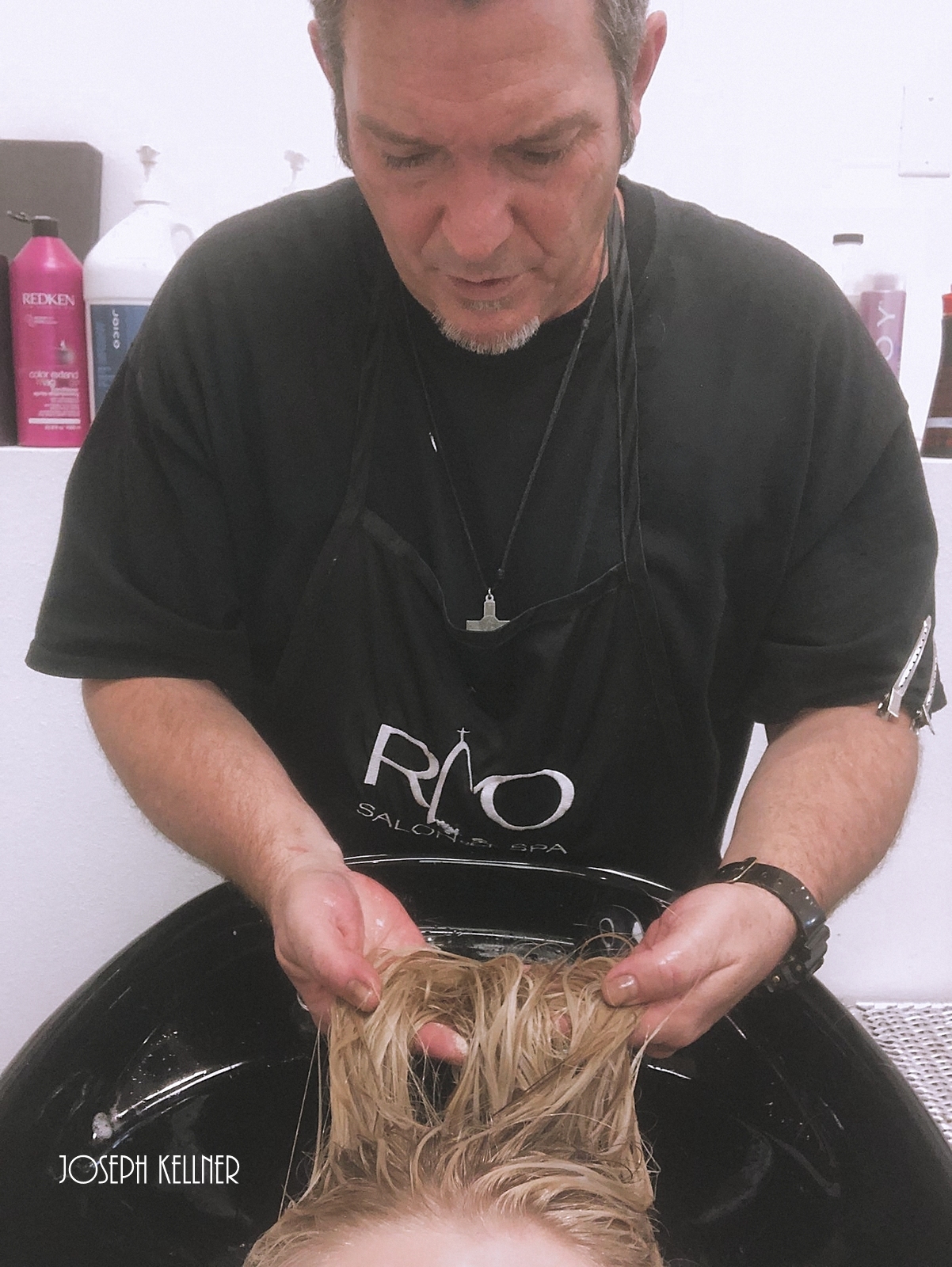
I went ahead and took out all of my foils and combed out all of my teasing to complete the hair color and now the shampoo. The Maui line has a wonderful fragrance to it. And since I am dealing with chemically treated hair I decided to use the weightless coconut milk which infuses this light and creamy shampoo along with sheer guava oil and mango butter. Which I recommend for colored treated hair and bleached hair. Apply shampoo generously to wet hair, massage into a lather through to ends, then rinse the hair thoroughly. After shampooing, follow with conditioner. Warning: Avoid contact with eyes. If contact occurs rinse immediately. For best results use in conjunction with other Maui Moisture products. I was concerned about the amounts of alcohol in the ingredients and emailed the company. This was there response. “Some alcohols can cause dry, frizzy hair while other types of alcohol can act to help condition hair. One of the types of alcohol we choose to use in our Maui Moisture formulas are Cetyl alcohol and Cetearyl alcohol. These are known as fatty alcohols, they help give a smooth, soft feeling to the hair shaft by helping the cuticle to lie flat on the surface of the hair. They also function as thickeners, nonionic surfactants, and emulsion stabilizers. Some of our products also contain isopropyl alcohol or denatured alcohol as well”.

I finished the process and the hair came out beautiful, the fragrance is wonderful and I really did not need a conditioner. Give it a try everyone. Its also gluten free.
Ingredients; Aloe Barbadensis Leaf Juice, Water (Aqua), Behentrimonium Chloride, Cetearyl Alcohol, Cetyl Alcohol, Glyceryl Stearate, Alcohol, Cocos Nucifera (Coconut) Water, Cocos Nucifera (Coconut) Fruit Extract, Psidium Guajava (Guava) Seed Oil, Mangifera Indica (Mango) Seed Butter, Cocos Nucifera (Coconut) Oil, Panthenol, Caprylyl Glycerin/Sebacic Acid Copolymer, Diheptyl Succinate, Polyquaternium-10, Polyquaternium-37, Propylene Glycol Dicaprylate/Dicaprate, PPG-1 Trideceth-6, Tapioca Starch, Glycerin, Propylene Glycol, DMDM Hydantoin, Diazolidinyl Urea, Iodopropynyl Butylcarbamate, Fragrance (Parfum).


You must be logged in to post a comment.